Tuesday, July 29, 2014

Reunion - Birthday Party

We celebrated Joe and his birthday (which was back in April)


Hard to extinguish those "magic" candles


Monday, July 28, 2014

Reunion - Hot Springs

Elkhorn Hot Springs are up the road a ways from the Grasshopper Inn 
This lodge has some rooms and a restaurant
Click here for a virtual tour
This building houses a pool/wet sauna with temperatures 98-107 degrees. 
To the left of the building are two outdoor natural Hot Springs pools ranging in 
temperature from 80-98 degrees
We enjoyed soaking in the coolest pool
Our grandchildren enjoyed the nearby creek as much as they did the soaking pools

We went back a second night for dinner in the lodge & one more soak

Patrick likes to soak in the hot springs year round, 
but especially in the winter. 


Sunday, July 27, 2014

Reunion - Bannack Ghost Town

The discovery of gold in Grasshopper Creek in 1862 led to the founding of Bannack, Montana. In 1864 Bannock became the first territorial capital of Montana. That didn't last long; in 1865, Virginia City was named the territorial capital. 

The population of Bannack dwindled as gold was discovered in other parts of Montana. By the 1950s most people had moved out of Bannack and it was made a state park. About 60 buildings are left in this once prosperous and bustling town.  
Click on the pictures for a larger image


the colors of the weathered wood are beautiful
 You can enter most of the buildings
Built in 1875, this brick building was the first Beaverhead County Courthouse. In 1881 the county seat was moved to Dillon. Beginning in the 1890s until the 1940s the building was the Hotel Meade.

Built in 1874 as a combination school house and Masonic Lodge
The lodge is on the top floor, the one room school on the first floor. 

Click here for previous visit to Bannack


Reunion - Coolidge Ghost Town

"Coolidge was …. the site of Montana's largest and final silver development. … The school district was organized in October 1918. As early as 1919, the community of Coolidge had begun to thrive and at this time work was beginning on the mine tunnel. …  By 1922 the town had both telephone service and electricity provided by a power line running from Divide over the hill to Coolidge.  A post office was established in January of 1922. Residents were entertained at the pool hall, or skiing and sledding during the winter.

By the time the mine tunnel and operation were ready to go, the national economy took a downturn and silver prices plummeted. In 1923, the whole operation had gone into receivership. W.R. Allen lost his personal fortune and control of the property. In 1927 a Montana Power Company dam failed and water washed out twelve miles and several bridges of Boston-Montana's railroad. The school district was abandoned and in 1932 the post office was discontinued…." Coolidge is being allowed to go back to nature. No attempts are being made to preserve or restore the buildings (as they are at Bannack). More here

This ghost town was started later than many of the other Montana ghost towns we've read about. The abandoned town is about a 15 minute walk from the parking lot. Joe and David talked while the rest of the group hiked back to the ghost town. When we returned, David and Joe were gone. Later we found out the mosquitoes were so bad that David and Joe went back to the Grasshopper. 
schoolhouse collapsed into the river
beautiful colors in the weathered wood
Many of the buildings appeared to have dirt on the roofs - 
extra insulation for Montana winters?
click on an image for a larger view


The town is littered with stoves, tin cans, metal bed frames
& other abandoned possessions


Saturday, July 26, 2014

Reunion - Sound of Music Moment

Do you remember the scene in the Sound of Music - Maria/Julie Andrews is in a meadow full of beautiful flowers - singing - with the mountains in the background? At least that's how I remember it (it's been decades since I've seen "The Sound of Music" so my memory might be incorrect.)

On our way to Crystal Park to dig for treasure, we passed a beautiful meadow full of yellow and purple flowers. I told the group we needed to stop there on the way back for a "Sound of Music" moment - and we did. 


I did sing out "The hills are alive ... " 
but didn't have any takers for a family sing-along :) 

 Click an image to see larger sizes for all images

 It just felt good to revel in all that beauty


more enjoyment of the moment


the hills are alive
with beauty


Books - Mothers & Daughters

 There are some major similarities between two books I read back to back  -  Amy Tan‘s, “The Bonesetter’s Daughter” and Liz Trenow’s “The Forgotten Seamstress.”

My sister recommended “The Forgotten Seamstress.” I learned about “The Bonesetter’s Daughter” from a “best books” list in The Week magazine. “The Forgotten Seamstress” was a page turner. Somehow I knew it would be before I even started reading it. “The Bonesetter’s Daughter” was an interesting read,  especially for the insights into Chinese culture, but it wasn’t a page turner for me.

Main characters in both books are daughters who are dealing with their relationships with mothers who have dementia. Daughters in both books are living with men they aren’t married to; they’re trying to figure out their level of commitment to each other. Both are cleaning out their mothers’ homes and dealing with the accumulations of a lifetime.

As these women deal with all the stuff, they find themselves wondering what to keep, what to throw out. Items bring back memories. Some items don’t bring specific memories but you know there must be a story somewhere. Can we come up with the real story?

Both books speak to the importance of talking with our relatives and learning their stories – before it’s too late and everything is gone. I think of Mom and her reluctance to tell her stories. When we pushed her to share and were met with reluctance, I sometimes teased it would be better if we learned it from her instead of having to figure it out ourselves and get it wrong. We can make up some good stories but we’ll never know if we got it right until we see her on the other side.
 ***************

Maria is an orphan who lands a job in the sewing room of Buckingham Palace before World War I. She and the teenaged Prince of Wales have an affair. One thing leads to another and she is confined to a mental institution – for decades.

Many years later Caroline is cleaning out her mother’s home and finds a beautiful quilt. The quilt becomes a character in the story as the author unfolds the relationship between the quilt, Maria, Caroline, and Caroline’s parents.

The quilt brings to mind all sorts of analogies – the threads that tie us together throughout the generations. The patchwork of experiences that make up our lives. Just as a quilt is made up of layers, our lives have many layers and sometimes there’s a secret in amongst the layers, just as there was in this quilt.

This story made me think about the crazy quilt that Celia Cathcart Holton pieced. Ruth Holton has it. Was it made out of family fabrics? Were there stories behind the swatches? Are there messages hidden in the stitching or inside the quilt?

***************

Mother-daughter relationships are a major theme of Amy Tan’s books. As Ruth Young’s widowed mother LuLing succumbs to Alzheimer’s, Ruth discovers there’s much about her mother that she never knew. I like the cultural aspects of Tan’s books – learning about the Chinese culture and the adjustments to life in the United States.

Ruth and her mother LuLing had a tumultuous relationship. After her mother was totally “lost” to Alzheimer’s, Ruth pondered her relationship with her mother and realized that all along her mother “simply wanted to be essential, as any mother should be.” (p301) Amen to that!

Some reviewers talk about the voicelessness of women – how and why they lost their voices. Others mentioned the ghosts from our past. – how our pasts affect our present and future.

In an interview Amy Tan said she started “thinking about how incomplete and fragile our memories are. We find bits and pieces of our own past or those of our parents and ancestors, and we try to reconfigure these fragments in order to understand ourselves: how we came to be who we are. “  (372)

More from Amy Tan in that interview -  “What is the past but what we choose to remember? They can choose not to hide it, to take what’s broken, to feel the pain and know that it will heal. They know where happiness lies, not in a cave or a country, but in love and the freedom to give and take what has been there all along.” (367-8)


Friday, July 25, 2014

Reunion - Digging for Treasure


Everyone but Joe went treasure digging one morning. We fixed a lunch to take with us. Joe requested the heels for his sandwich. His Grandmother Neely, Mamaw, told Joe his hair would get curly if he ate the heels and crusts. He's still eating them - still waiting for curly hair. Joe joined us later in the day. 
We went to Crystal Park, about 10 miles from the Grasshopper Inn. 
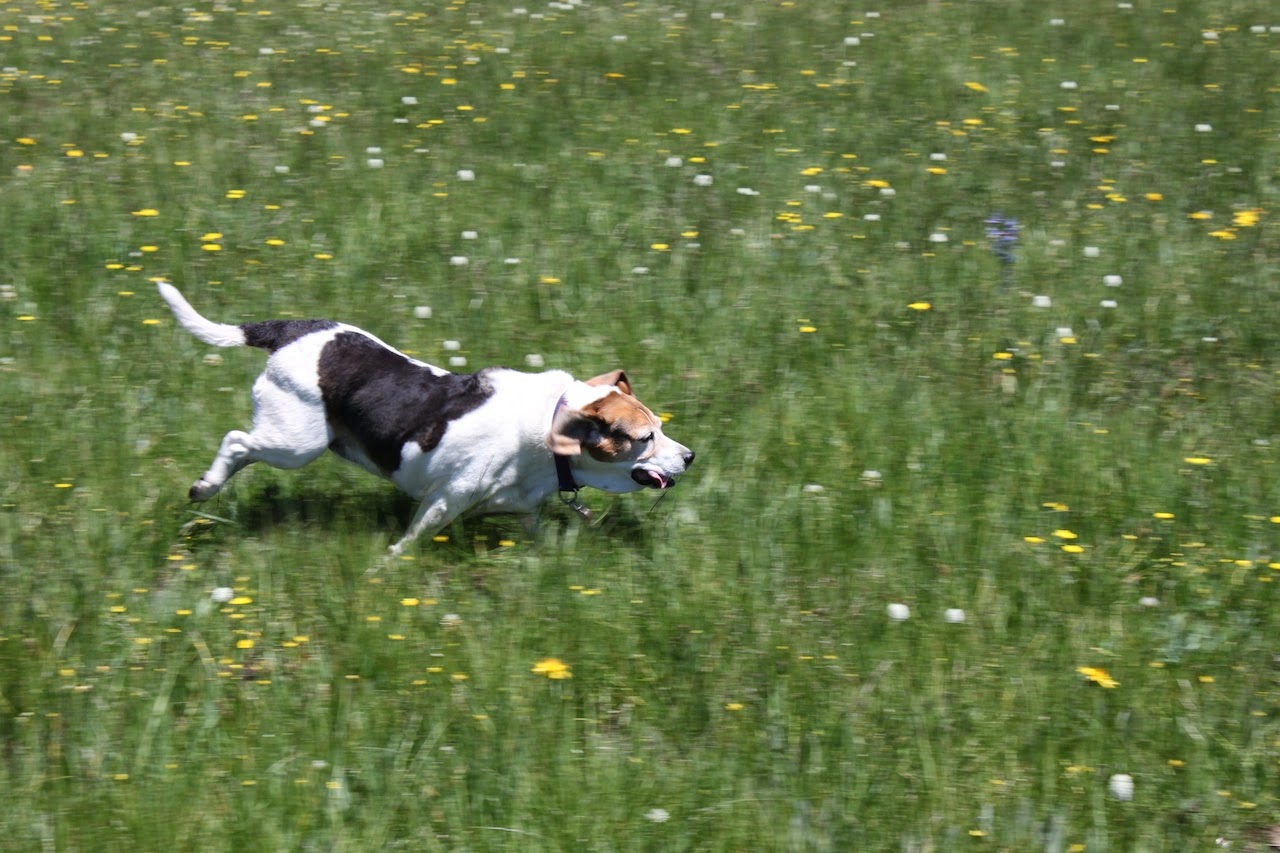
At 7,800 feet, this is a very unique park. People go there to dig in hopes of finding quartz crystals of all sizes and colors. We headed up to the top in search of good places to dig. Schmeagle, the crystal-sniffing dog, helps us select a spot. Holes, holes, holes - dug by treasure hunters. 

You can start your own hole or work a hole dug by someone else
dig

screen the dirt & look for crystals
dig some more


just a small part of what we found


fun treasures to unearth

Of course - family is the real treasure!